
If you notice a student seems off, showing up less, falling behind, acting out of character, the instinct can be to wait and see. Charles Snyder, PhD, vice chancellor for Student Success and co-chair of the CARE Team at the University of Tennessee Health Sciences, wants you to know there’s another option.
“The problem is never too small to call the CARE Team,” Dr. Snyder says. “We’re available 24 hours a day, seven days a week. All you need to remember is 901-448-CARE.”
That message is one Dr. Snyder finds himself repeating often, because most people, students, faculty, and staff alike, don’t learn what the CARE Team does until they need it. By then, the window for early intervention has already closed.
What a CARE Team Actually Does
CARE Teams exist at the intersection of student support and campus safety. At UT Health Sciences, the Office of Student Success receives concerns through a phone line, email, or online form, then works with an evidence-based framework to understand a student’s situation and figure out the best way to help.
That help takes many shapes. A student struggling academically might be connected to tutoring or advising. One navigating food or housing insecurity might be linked to the campus food pantry or the Student Emergency Fund. In situations where more structured support is needed, the team works with campus partners to coordinate next steps.
“We’re an interdisciplinary team,” Dr. Snyder says. “When a care concern comes in, we can pull together a lot of what the university knows and assess what the best response is going to be.”
One of the things Dr. Snyder is also most deliberate about communicating is what the CARE Team is not. Mental health is often part of the picture but it’s rarely the whole picture, and the team isn’t a mental health crisis line. He says that’s exactly the kind of thinking the office works to deprogram.
“We’re here to support all our students in all the various aspects of their experience. We oftentimes catch things earlier if we’re watching for those things and not a mental health crisis alone.”
A care concern is not in any way a disciplinary process, he emphasizes. It’s an invitation for help.
That message echoes across the UT System. Jessi Gold, MD, MS, chief wellness officer for the UT System and a psychiatrist taking care of students at University Health Services at UT Health Sciences in Memphis, has been a supportive force in bringing the campuses together around shared professional development in student wellness and safety. She accentuates the importance of collaboration on these topics. She also recently helped welcome a new director of wellness to UT Health Sciences, an addition Dr. Snyder sees as further strengthening the support network available to students.
“The momentum we’re building across the UT System around student and community wellness is real,” Dr. Gold says. “It isn’t just an afterthought, or a thought in a crisis, it is a value and something central to the student experience, especially here at UT Health Sciences. Our students aren’t just researchers or future clinicians, they are humans, first.”
A First for the UT System
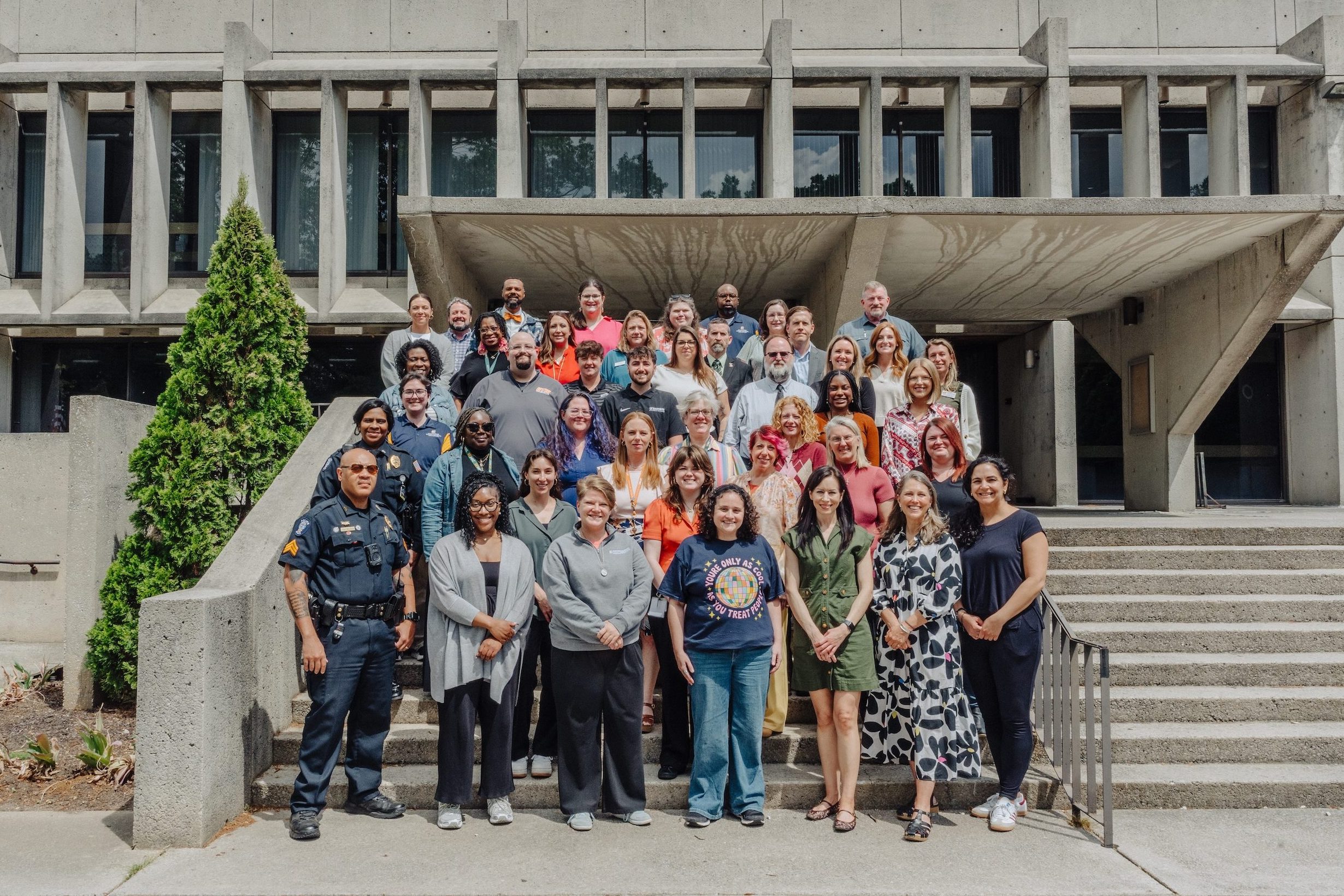
Recently, UT Health Sciences hosted CARE Team representatives from every campus in the system for a two-day, on-site National Association of Behavioral Intervention and Threat Assessment (NABITA) recertification training, the first time all UT campuses had gathered for this kind of professional development under one roof.

Previous trainings had happened in silos, with a virtual course at one campus and one or two staff members sent to a national conference at another. Bringing everyone together in person, Dr. Snyder says, changed what was possible.
“When you go to a conference with people from all over the country, you can’t get to the same level of nuance,” he says. “Here, we were able to think about things in the context of our own system policies, Tennessee state laws, and our shared experiences within UT. That’s not something you can easily replicate.”
The training drew participants from across the system, including, notably, a provost. Dr. Snyder said he was struck by the presence of Prentice Chandler, PhD, provost and executive vice chancellor for Academic Affairs & Student Experience at UT Southern, who attended not because he would serve on a CARE Team, but because he wanted to understand the work and bring it back to his campus.
“We have a responsibility to understand and strengthen the systems that support students when they need help,” Dr. Chandler says. “This work is essential to the life of a university because it reflects who we are at our best — a community committed to seeing students, supporting them, and giving them every opportunity to succeed.”
The event came together through the work of UT Health Sciences’ Mark MacNamara, director of Student Success Strategic Initiatives as well as director of Military-Affiliated Student Affairs and interim director of Campus Recreation, and Eliane Pater, director of Student Life. The Office of Student Success has led related efforts on campus, including the recent launch of naloxone training and OneBox installations across the downtown Memphis campus.
“The CARE Team demonstrates an unwavering commitment to supporting students through compassionate, coordinated, and responsive care,” says Brene’ Moore, CARE Navigator for UT Health Sciences. “Our work reflects a genuine dedication to student well-being that ensures students receive the resources and support they need during challenging circumstances.
“I believe the NABITA training has strengthened my ability to effectively assess, respond to, and manage complex student situations, further equipping me to support student well-being in a proactive and professional manner.”
Dr. Gold adds it’s been great to see the campuses unite around evidence-based approaches, like NABITA, for helping students.
“I hope to find more and more ways to do this through my role as chief wellness officer. Being on a CARE Team is important work, but hard work too, and building community in these conversations also supports our staff doing the work, which is essential, and needed to best support our students.”
No Wrong Door
For Dr. Snyder, the training also represents more than a renewed credential. It shows a shared philosophy across campuses, disciplines, and roles about what universities owe their students when things go wrong.
The CARE Team’s work, he says, isn’t about identifying threats. It’s about being present before things get harder.
Students, faculty, and staff who have a concern about a student can reach out to the CARE Team any time at 901-448-CARE (2273) or by submitting a care concern. The Office of Student Success is additionally reachable via email. Students are also welcome to reach out about themselves.
“We work really hard, and we’re really committed to our students,” Dr. Snyder says. “What I love is the idea of people having some tools to let others know what’s happening, so that when someone needs us, they already know we’re there.”