
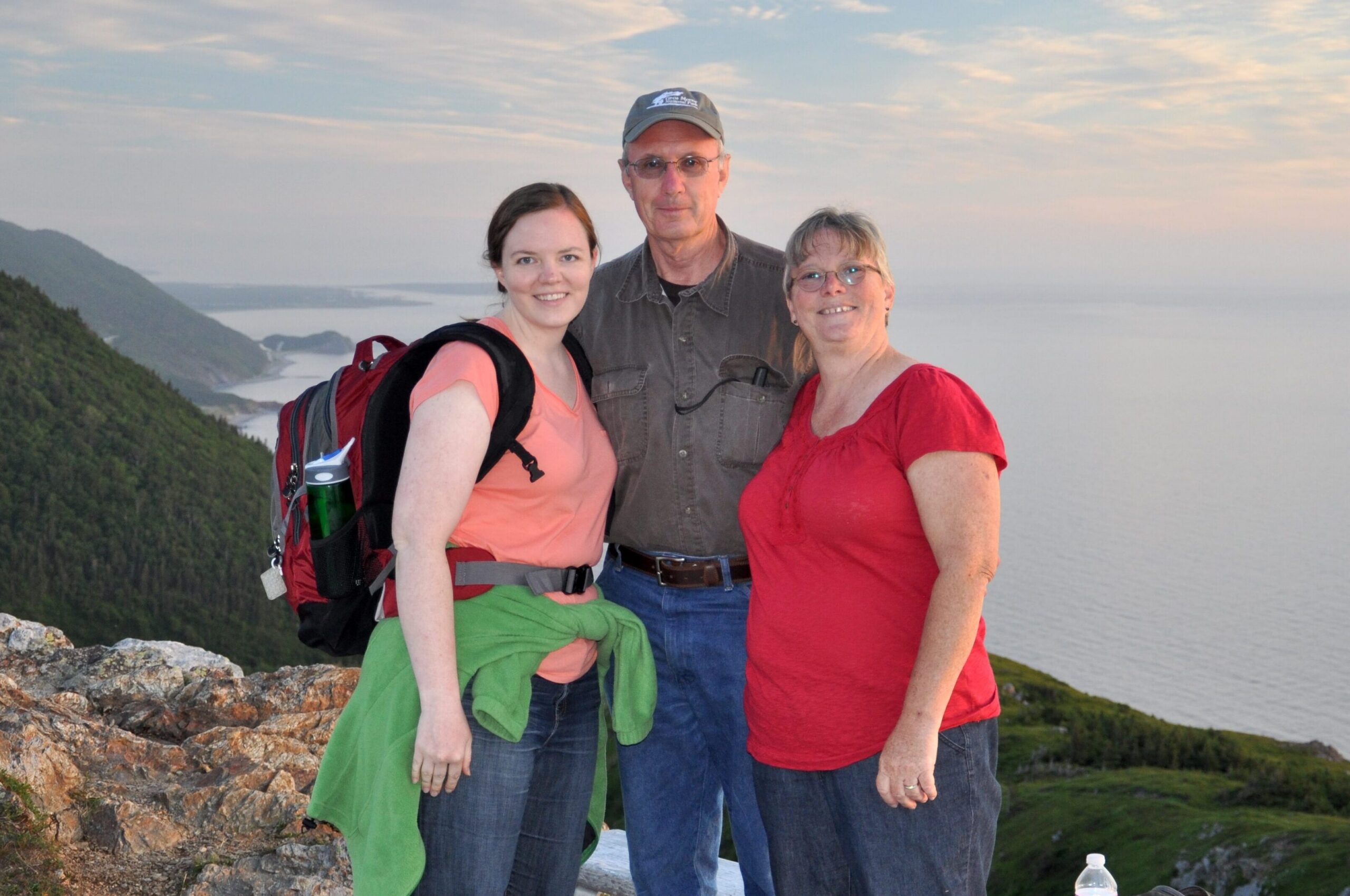
When Dee and Jamie Evans talk about their daughter, Stacey Lane Evans, MD, they don’t begin with personal accolades or professional titles. They start with the constants of who Stacey was as a person and as a physician. Quietly principled. Deeply empathetic. Unwaveringly kind. The words are delivered, cloaked in the love and pride they feel, and surrounded by the shock of absence following Stacey’s unexpected passing in August 2025 at age 40.
“Stacey was grounded. She was always thoughtful. She was kind and joyful,” Jamie said. “She didn’t care what others thought about her, positive or negative. She certainly wasn’t perfect, but she was definitely her own person.”
In Stacey’s memory, the Evanses established an endowed fund benefiting the University of Tennessee Health Sciences and Le Bonheur Children’s Hospital, two institutions central to Stacey’s formation and her calling. The goal is simple but also impactful: Continue what mattered to Stacey as a physician, caring for children and teaching the next generation.
“In an unfathomable time, the decision to establish this fund was easy,” Jamie continued. “We’re setting the stage to continue what was important to Stacey.”
It Took a Village
Stacey’s story begins at Ames Plantation, an 18,000-acre private preserve and University of Tennessee research center in Grand Junction, Tennessee. Jamie and Dee lived and worked there for more than 40 years, Jamie in agricultural science and Dee primarily as a Kindergarten teacher. “Living at Ames wasn’t just a job; it was really a way of life,” Jamie said.
On “the Hill,” the residential cluster near the historic manor house, several young families raised children together. Stacey was an only child at home, but there were six children within three years of her age, providing an expanded household of “siblings.”
“Stacey grew up with three or four moms, three or four dads, and a house full of brothers and sisters,” Jamie said. “It was idyllic.”
Being connected to the University of Tennessee also made Ames intellectually rich with adults modeling curiosity and academic excellence. “It wasn’t just Stacey who benefited,” Jamie said. “The Ames experience shaped all of those children, supporting them as they grew into successful adults following various career paths.”
During the tributes at her memorial service, loved ones returned to the same theme. There was something unmistakable about Stacey. “Even as a child, you just knew that little girl was something special,” her cousin Stephanie Atwood recalled. “I knew she was going to be somebody.”
A Calling Came into Focus
Stacey didn’t take a straight path to medicine. She attended Mississippi State University on a marching band scholarship, initially planning to study journalism before switching to psychology, with the goal of earning her doctorate to practice clinically. Midway through her first year of college, her calling became clear.
“She realized if she couldn’t prescribe the medications her patients might need, she should just go to medical school and become a psychiatrist,” Jamie said. “And that was that.”
Even without a formal pre-med track, Stacey completed all prerequisites. She enrolled at the UT Health Sciences College of Medicine and graduated in 2011. She shifted her focus from psychiatry to pediatrics after spending more time with infants during her rotations. Holding babies in the nursery was a favorite way to spend breaks.
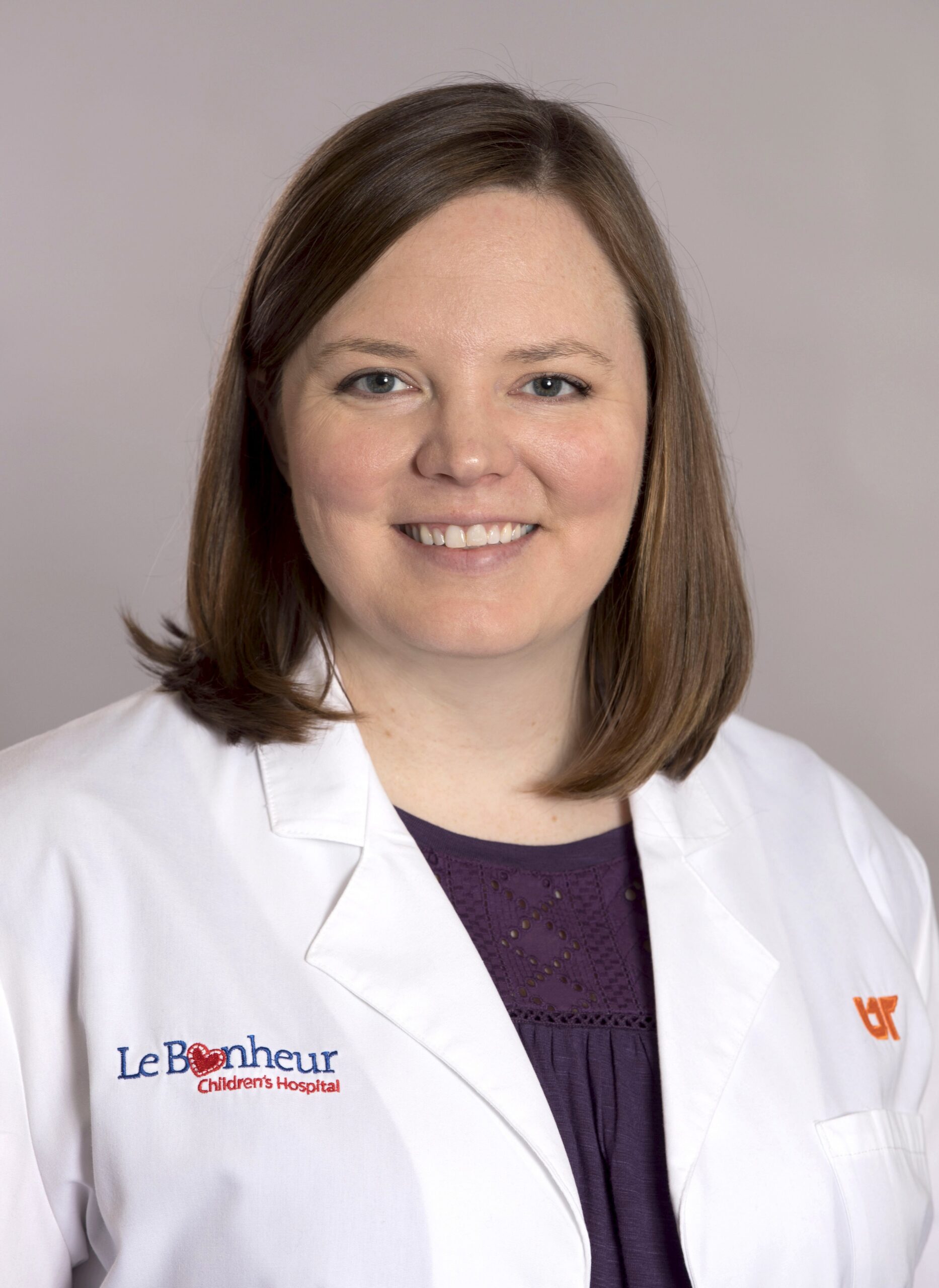
“Stacey was so deeply woven into the UT community that it’s hard to remember a time before she was part of it,” said Natascha Thompson, MD, who worked with Stacey first during Stacey’s medical school years and subsequently during her time as a pediatric resident and then as an assistant professor on the pediatric faculty. “From her days as a student to becoming an exceptional resident and physician, bringing Stacey into our pediatrics family was an easy decision and one that made us proud.
Her kindness, compassion, and authenticity made her a treasure in every space she occupied.”
Colleagues say Stacey’s intuitive clinical mind was matched by her tenderness. Speaking at Stacey’s memorial, Emilee Dobish, MD, recalled meeting Stacey during peds residency orientation and subsequently working with her as a hospitalist at Le Bonheur. “When she called with a consult, you knew that it would be a hard question, because she always thought so much and so long about her patients before making that call.
“Stacey also demonstrated the importance of kindness and compassion to everyone she worked with, not just her fellow residents and physicians. Everybody just loved her.”
In the difficult moments, Stacey often carried the weight with the families. Early in her career, she called her parents in tears after delivering a terminal diagnosis. “Accepting defeat was not in her nature,” Jamie said. “But this early experience led her to touch the lives of countless children and their families.”
While Stacey loved her 10 years at Le Bonheur, her deepest joy came from teaching and mentoring. “Her real passion was teaching,” Jamie said. After securing the full-time “dream” teaching position at St. Louis University, Stacey and her husband, Matt, moved there only months before her passing. “What a mentor she would have been,” recalled longtime Ames friend Brother Mark Shires in his eulogy.
The Promise of Philanthropy
Dee and Jamie Evans established the Dr. Stacey Lane Evans Memorial Resident Award and Scholarship Endowment to ensure Stacey’s most defining qualities — compassion, diligence, and mentorship — continue through others following her path. The fund will support future pediatric professionals by creating opportunities for either current pediatric residents in the UT Health Sciences/Le Bonheur Pediatric Residency Program or fourth-year medical students who have matched into the program and exemplify the qualities Stacey embodied.
“We want those students and residents who may benefit from this fund, even 50 years from now or more, to know who Stacey was as a person and physician,” Jamie said. “We can’t imagine a better way to honor her and continue her legacy.”
Though modest now, the fund is structured to grow substantially through a planned gift. Still, the purpose isn’t scale or recognition. It’s about continuity and allowing Stacey’s work to carry on. To continue her instincts to notice, to care deeply, and to show up for others. It becomes a bridge to span generations.
“This fund is a meaningful tribute to Dr. Evans and a testament to the remarkable physician and teacher she was,” said Michael Hocker, MD, executive dean of the College of Medicine. “It reflects her devotion to children, her compassion for families, and her love of teaching. It will also create lasting impact by providing future physicians the support and opportunities to help shape generations of pediatricians.”
When Stacey turned 18, her parents wrote her a letter filled with guiding principles. Dream big dreams. Act with integrity. Accept imperfection. Think long-term. Above all, they reminded her, “You never failed to make us proud.”
In the wake of their loss, Dee and Jamie are investing in the very things that helped define Stacey’s life. Children, compassion, and the education of those who heal.
“Dr. Stacey Lane Evans brought compassion, clinical excellence, and a dedication to teaching to Le Bonheur Children’s Hospital,” said Trey Eubanks, MD, president of Le Bonheur. “This endowment honors her commitment to pediatric care and how she inspired her colleagues, nurtured the next generation of physicians, and represented the best of our mission. This enduring tribute will provide support for residents and students who share her qualities, helping to guide pediatricians for years to come.”
The admiration from leadership captures Stacey’s professional legacy in her chosen field. But her friends and family also remember the everyday effect, the joy she shared, and the ways she showed up.
“You lived a life that mattered,” lifelong friend Laura Johnson said in her tribute to Stacey. “And we will carry that life with us forward, always.”
Built to Last
Endowments work like permanent funds. The original investment stays intact while earnings support students, faculty, and programs year after year.
Your Legacy, Your Way
An endowed fund lets your values make a difference for generations. Donors often establish named endowments to honor someone meaningful, preserve a legacy, or champion the causes closest to their hearts.
Giving That Gives Back
Endowed gifts shape the future of UT Health Sciences and may offer valuable tax benefits, empowering donors to create lasting impact.
Endowment Snapshot: FY25 (July 1, 2024–June 30, 2025)
- 728+ individual endowments at UT Health Sciences
- $295 million total market value (UT Health Sciences)
- $1.7 billion total UT System endowment
For more information on endowed funds or other ways to support UT Health Sciences, contact:
- Bethany Goolsby, [email protected], 901.448.5516
- Melissa Robinson, [email protected], 901.448.5516
This story was initially featured in the summer 2026 issue of Health Sciences magazine.