

By 7 a.m. on the fourth Saturday of each month, the parking lot across from St. Patrick Catholic Church is already moving. Volunteers line up pallets, a DJ sets up speakers and cars begin turning onto Martin Luther King Avenue before the food boxes are done being packed.
Eugene Mangiante, MD, has been part of the effort since the beginning. “This is always a busy place,” he says.
By the time the St. Patrick Champion Community Outreach Center’s mobile food pantry wraps up in Memphis, 400 to 450 cars will have passed through. Some are picking up for families without transportation, others driving in from zip codes across Shelby County. The center sits in 38126, documented as the poorest zip code in Tennessee and roughly two miles west of the University of Tennessee Health Sciences main campus.
A Surgeon’s Second Call
Dr. Mangiante spent 44 years at UT Health Sciences. Medical school, general surgery residency and decades on the faculty as a professor of Surgery. He was also a founding surgeon at the community’s level one trauma center, now known as Regional One Health.
“I promised myself for all the time we were busy down at UT, someday I’m going to have time to do some work for the church,” he says. “As soon as I retired, that’s what I started doing.”
The invitation came from an old friend. The former pastor, Monsignor Val Handwerker, at St. Patrick’s, whom Dr. Mangiante has known since high school, called with what he framed as a job offer but one that paid nothing. He said yes.

When the pandemic made face-to-face distribution impossible that same year, Dr. Mangiante teamed with WMC-TV anchor and Memphis Rotary Club member Joe Birch and a group of St. Patrick parishioners to build a contactless trunk-to-trunk model in partnership with the Mid-South Food Bank, Metropolitan Interfaith Association and the Rotary. UT Health Sciences, Birch notes, has supported the effort as a sponsor since the beginning, with the institution’s logo on the banner along Martin Luther King Avenue.
What started as a temporary workaround now draws hundreds and hundreds of people.

Since 2020, Dr. Mangiante has served as director of the St. Patrick Champion Community Outreach Center, a nonprofit ministry that now reaches 20,000 people per year throughout the Memphis area. In addition to the monthly mobile pantry, the center runs a neighborhood food pantry three days a week, a clothes closet, a Sunday hot meal for approximately 80 to 100 people and a foot clinic on the fourth Sunday of each month.
“‘Dr. Gene’ as we call him,” Birch says. “Has become a role model for this reporter through his quiet marathon of life-giving service.”
Dr. Mangiante’s medical background benefits how the center operates. The food boxes are assembled with protein content in mind. And the foot clinic, run by an occupational therapist with years of vascular surgery experience, screens guests for diabetic ulcers, hypertension and venous disease, referring those who need further care to local specialists.
People with severe diabetes can lose sensation in their feet entirely, Dr. Mangiante explains, which means a nail or rock inside a shoe can go unnoticed for weeks and wear an ulcer into the foot’s sole.
“I know we have stopped the progression of a foot ulcer turning into an amputation,” he says.
Showing Up
Sharon Valente, PhD, heard about the mobile food pantry announced at Sunday Mass in October 2023 and went that same Saturday with no particular plan, just a sense that she should. She hasn’t missed one since.
“Getting involved was just a natural extension of who I am,” says Dr. Valente, director of Institutional Effectiveness at UT Health Sciences. “I said to the pastor, ‘This is who I hope I am.'”
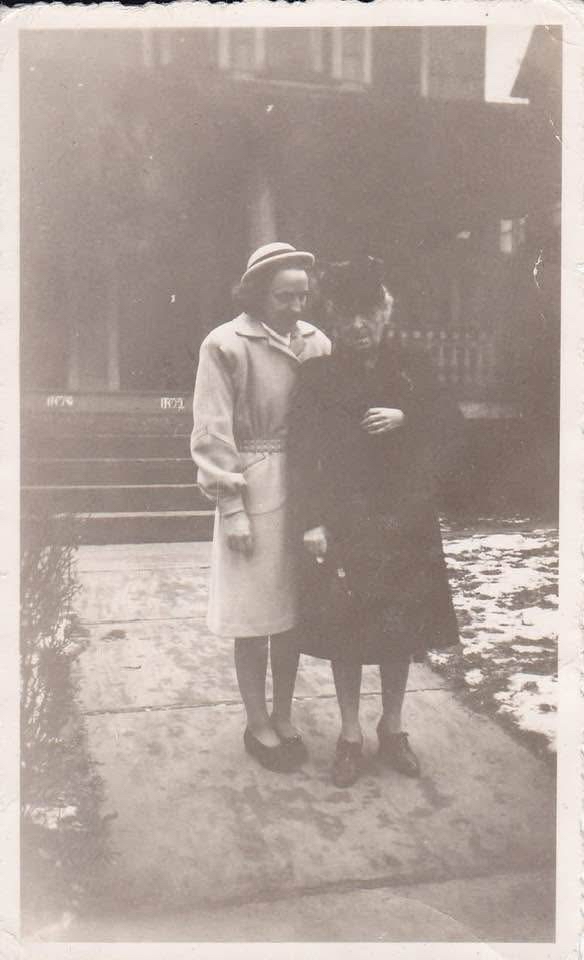
Her natural impulse runs through her family history. Dr. Valente grew up in a large Irish Catholic family in Cleveland, raised by women who treated service as simply what you did. Her grandmother fed neighbors off her back porch during the Depression, and her mother — diagnosed with polio at age 20 — raised five children while living that same example.
“You help where you can,” Dr. Valente says, echoing her mother.
At UT Health Sciences, Dr. Valente oversees the infrastructure of accreditation and assessment. On fourth Saturdays, she works a food pantry line, and the two roles aren’t as separate as they sound. She knows the institution’s resources the way someone embedded in it for years does, and when a stranger in the pantry line mentions a health concern or a struggling family member, she can connect them to options more easily, options she trusts.
Her son Kevin also receives dental care at the UT Health Sciences College of Dentistry. “I work at UT,” she says. “I trust these people with my son’s care.”
Dr. Mangiante emphasizes Dr. Valente’s consistency and fellow ambassadorship. “Sharon is as reliable as the sun coming up in the morning.”
Birch agrees with the sentiment. “Dr. Sharon Valente has been a rock among our army of volunteers. We’re deeply grateful for her inspiring service and example.”
What’s Growing
The volunteer spirit that brought Dr. Mangiante and Dr. Valente to 38126 draws others from the UT Health Sciences community. After Dr. Valente put out a notice about volunteering, a colleague in oral surgery reached out asking whether teenagers could come for service hours. They showed up earlier than Dr. Valente did.
“A number of UT Health Sciences faculty and students volunteer consistently,” Birch says. “The students frequently distribute nutrition information before lending a hand to load groceries into trunks, hatchbacks and backseats.”
Birch adds how Peter Buckley, MD, chancellor of UT Health Sciences and member of the Memphis Rotary Club, cheers on the monthly mobile food pantry efforts at Rotary meetings, where organizers keep members updated on the vital community project.
The atmosphere helps. “Every month feels like a party,” Birch says, “amplified by WDIA DJ Stan Bell’s contagious joy radiating over the public address system.”
Through conversations between Dr. Valente and Dr. Mangiante, the center has also connected with Orpheus Triplett, DDS, associate dean of Extramural Clinical Education and Community Service at the College of Dentistry. Dentition among the center’s guests is severely lacking, Dr. Mangiante says, and volunteers have begun collecting health and insurance information from willing guests to help identify what care may be available to them.
The need stretches further still. Dr. Mangiante sees clear opportunities for psychiatry, psychology, general surgery and eye care. He says the guests he sees each week reflect many of the same conditions his patients had over four decades in the operating room. The campus where he trained and taught is around the corner, he says, and can help.

How to Get Involved
The fourth Saturday mobile pantry is the most accessible entry point for anyone in the UT Health Sciences community. Once a month, outdoors, and open to all volunteers who can show up early and ready to pack boxes. For students and residents with a clinical interest, the fourth Sunday “More Than a Meal” event combines wellness checks, foot care and a hot meal.
What the center needs most, both Dr. Valente and Dr. Mangiante say, is consistency. Showing up once matters. Showing up every month is what changes things.
“There are so many opportunities for people to get involved from the university,” Dr. Mangiante says, “not only for community service but also for medical care and possible referrals.”
Faculty, staff and students can find current volunteer opportunities at the center and other community sites through GivePulse. The next mobile food pantry you can be part of is this weekend, Saturday morning, Sept. 26.
Part and Parcel
Dr. Valente has a phrase she keeps returning to when she talks about her Saturday mornings, the connections and the theme running from her grandmother’s back porch to a Memphis parking lot. It’s “part and parcel” of who she is.
“It takes a village,” she adds. “You were part of the village that helped me get to where I am, and still are.”
Dr. Mangiante spent more than four decades in medicine, spurred by a willingness to serve from the beginning, and now spends his retirement doing what he promised himself he would away from the physician’s schedule. On the fourth Saturday, he’s in the parking lot. On the fourth Sunday, he’s at the clinic. Every week in between, the center’s doors are open.
“I always thought that if you wondered why we were put on this earth, it’s to help others,” he says. “That’s what we’ve tried to do here.”
And there’s always room for more hands.
Mobile food pantry and outreach center photos courtesy of the Catholic Diocese of Memphis.